What Is Unconscious Bias?
What Is Unconscious Bias and Where Does It Come From?
Have you ever caught yourself making a snap judgment about someone, only to later realise it wasn’t fair? That’s unconscious bias at work. It’s a deeply human tendency—one that shapes our decisions, often without us noticing.
Unconscious bias (sometimes called implicit bias) refers to automatic associations our brains make about people or groups (Fuller, 2020). Unlike overt prejudice, unconscious bias operates quietly in the background.
Psychologists demonstrated this paradox in the 1980s: people can sincerely reject prejudice consciously yet still act in biased ways because bias is also a habit of thought (Forscher et al., 2017).
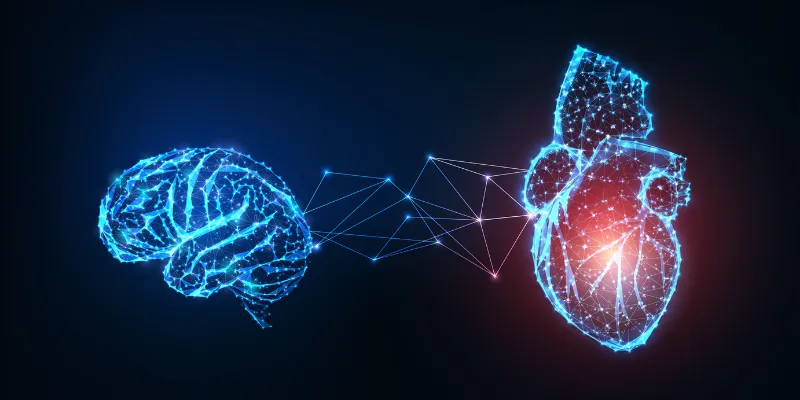
Why does bias happen? Neuroscience explains this through three interacting systems of the brain (Fuller, 2020; Nordell, 2021):
The primitive brain scans for threat.
The emotional brain stores associations and feelings.
The thinking brain reasons but often filters information through existing beliefs (confirmation bias).
Intelligence does not protect us from bias—studies show that people skilled in reasoning can be even better at defending their blind spots when information contradicts beliefs (Nordell, 2021).
Bias is also cultural. From childhood, we absorb messages about gender, race, ability, and more through media and institutions. These become “truths” we rarely question (Moodley, 2018). If you’ve never interacted meaningfully with a certain group, stereotypes often fill the gap.
Research(Moodley, 2018)shows that members of disadvantaged groups may adopt society’s negative stereotypes about their own group—a phenomenon that I refer to as ‘internalised bias’
The good news? Bias is learned, which means it can be unlearned. Habit‑breaking interventions show promising results (Forscher et al., 2017). Techniques include:
Stereotype replacement
Perspective‑taking
Counter‑stereotypic imaging
In my own coaching processes, combining reflection with structured exercises helped people change automatic thoughts, emotional triggers, and micro‑behaviours.
Unconscious bias shapes workplaces, schools, healthcare, and justice systems. Even small biases in recruitment or evaluation can accumulate into large systemic disparities (Moodley, 2018).
Quick Facts
Unconscious bias = automatic shortcuts shaped by culture and memory.
Everyone has biases—it’s part of how the brain works.
Bias can be changed with awareness, reflection, and practice.
Unchecked bias reinforces inequality across society.
A Reflective Question
Do you notice thoughts that feel like “truths” about categories of people? Do they mirror cultural stories? Awareness is the first step, from this it is possible to change the beliefs beneath them in coaching.
References
Fuller, A. (2020). The Leader’s Guide to Unconscious Bias, Chapter 2.
Forscher, P. et al. (2017). Breaking the Prejudice Habit: Mechanisms, Time course, and Consequences.
Moodley, S. (2018). The Influence of Unconscious Bias on Organisational Culture.
Neuro Coaching Speech Complete Rebuild (2025). SharePoint Library.
Nordell, J. (2021). The End of Bias: How We Change Our Minds, Chapter 2.
